
Career Opportunities: National Centres of Competence in Research
Today’s focus is on the NCCR AntiResist
The National Centres of Competence in Research (NCCR) is a funding initiative of the Swiss National Science Foundation (SNSF) that provides grants for up to 12 years. These centres comprise multiple research groups working collaboratively within an interdisciplinary network that includes partners from academia, the public sector, and private industry. The centres can be applied to any discipline to shape the Swiss research landscape and enhance its international standing. Currently, 14 NCCR funding schemes are ongoing, 8 NCCRs were launched in 2014 (4th Series), and 6 in 2020 (5th Series), with more than 17 Swiss research institutions participating.
NCCRs adhere to five core pillars:
- Educating and training future scientists
- Promoting equal opportunities
- Supporting open science
- Facilitating knowledge and technology transfer
- Engaging in science communication and outreach
The centres are promoting scientists with grants, start-up opportunities, and interdisciplinary academic and industrial support. Their effervescent community enables students to develop communication skills across disciplines. Leadership and project management are encouraged and put to the test in recurring meetings with multiple principal investigators, which will help students steer their projects to success. Thanks to their structure, NCCRs offer a cutting-edge research environment with opportunities for networking with interdisciplinary researchers to Master’s and doctoral students, as well as to post-doctoral researchers. The NCCRs are a stepping stone for students’ careers, be it scientific or not!
As a member of the Women in Natural Sciences community, I found it important that the gender imbalance is closely monitored and reported by the SNSF; their reports indicate that, similar to the fourth series of funding (2014), no proposal led by female directors has been awarded in the fifth call (2020). Nonetheless, the centres aims on the long term at promoting science conducted by women in STEM. In 2021, female researchers, including some from the NCCRs covered in the blog, have been featured on YouTube along with the hashtag #NCCRWomen.
The upcoming series of blog posts discusses the 5th Series of the NCCRs, which were launched in 2020. Whenever possible, the post will include the NCCR’s answer to questions I had for them, covering opportunities, workshops they organise, grants they offer, and open positions.
Do you want to know more about the NCCRs?
Proposal selection for NCCRs occurs through a rigorous multi-stage peer review process, including assessments by international experts. For the 5th series, proposals advancing digitalization were prioritized. A call for proposals just concluded for a sixth series, resulting in 38 applications from which 16 have a woman as designated NCCR director. NCCRs have a duration of 8 to 12 years, divided into four-year funding periods. The federal government establishes the financial framework, typically approving between 8 and 20 million Swiss francs for each four-year phase. For the NCCR launched in 2014, the highest contribution from the SNSF was made to NCCR PlanetS with 48.70 million over 12 years. Each NCCR is backed by a higher education institution and includes other institutions in its network. The SNSF covers a share of the costs. Left column: SNSF contribution to the 5th Serie (2020) for the year 2024 only.
Middle column: SNSF contribution for the first four years. Right column: total budget coming from institutions, SNSF contributions, and other grants. - SNSF Key Figures: https://data.snf.ch/key-figures/nccr
More information on current and past NCCRs can be found here.
Today’s focus is the NCCR AntiResist for new approaches to combat antibiotic-resistant bacteria

Bacterial resistance is the process by which bacteria evolve the ability to survive antibiotics, turning once‑treatable infections into difficult or impossible-to-treat diseases. Its emergence and spread are accelerated by human activity, mainly the misuse or overuse of antibiotics, as they are used to treat, prevent, or control infections in humans, animals, and plants. Today, we are facing a shortage of new drugs against which bacteria have not developed resistance, with the last new antibiotic class being approved for treatment more than three decades ago. In the future, rising resistance could lead to millions of deaths annually by 2050 and overwhelm healthcare systems through longer illnesses, higher mortality, and increased economic burdens.1
AntiResist centres, consisting of 31 research groups across Switzerland and Israel, aim to gather knowledge on the mechanisms by which major pathogens infect their host, for which they closely collaborate with hospitals and industrial partners. Filling this gap is essential for giving present and future generations a chance to tackle the looming crisis of antibiotic-resistant bacteria.
The University of Basel, which is this NCCR’s home institution, as well as its partners, is creating laboratory models—such as organoids, tissue samples, or axenic systems—that mimic the physiological interactions between bacteria and human tissues in areas like the lung, bladder, deep tissues, placenta, and blood. Their models aim at representing the human body’s complexity and complicated interactions with its environment to better predict disease mechanisms and drug performance. Furthermore, they help reduce the need for animal testing and enable personalised medicine by replicating patient-specific tissue characteristics.
“After thirty years of stagnation in the development of new antibiotics, we are faced with the very near prospect of a post-antibiotic era, with common infections again becoming life-threatening. We are rising to meet that challenge.” –NCCR AntiResist Website
Since their start in 2020, they have made amazing progress: new antimicrobial strategies for the two critical bacteria Staphylococcus aureus2 (causing skin infections) or Streptococcus pneumoniae3 (causing pneumonia or meningitis) have been proposed, including targets for new synergistic drug combinations. In addition, some of their tissue models have focused on the interactions between the respiratory system and Pseudomonas aeruginosa, a leading cause of severe hospital-acquired pneumonia. It causes infections with an up to 50% mortality rate in mechanically ventilated patients. Recent publications from the NCCR AntiResist shine light on how P. aeruginosa disseminates on mucosal surfaces and invades the tissue barrier4 and how they form biofilms in the respiratory tract.5 NCCR AntiResist’s advances also include studying the mechanisms of how E. Coli adhere to the bladder mucosa, where the bacteria cause urinary tract infection.6 In parallel, they are developing a synthetic human urine medium to replicate the bacteria’s planktonic growth.
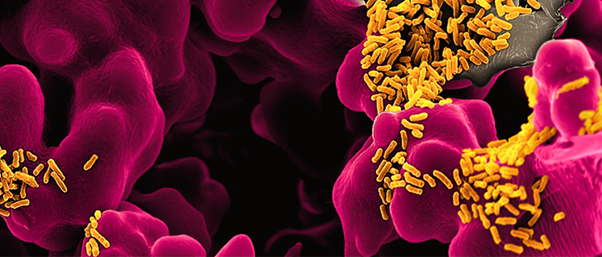
Finally, NCCR AntiResist keeps track of and reports on reemergent bacterial strains. For example, they monitor bacteria causing Brucellosis, a disease still present in some countries and parts of Europe, that is often unrecognized and frequently goes unreported, causing long-lasting symptoms including fever, joint/muscle pain, chronic fatigue, and organ inflammation that could lead to severe complications.7,8
The NCCR AntiResist gladly took some time to answer questions I had for them. Below, you can find out more about the opportunities they offer and their available positions. The full interview can be found in the PDF attached. If you want to know more about them, you can visit their website.
After six years of existence, what would you consider one of the biggest highlights or successes of your NCCR?
The greatest success of NCCR AntiResist, in one sense, is that it has achieved what it has set out to do. The consortium has established a transformation in antimicrobial research by building patient-mimicking models that recapitulate the environment of the infected human body, benchmarking the models against samples taken from infected patients.
From the different STEM disciplines, which students could join you? *
We have computational experts on our team, as well as engineers, physicists, chemists, and clinicians, in addition to our biologists, to support the effort to build and study our patient-mimicking models. Gathering, categorising, and managing the data involved in our projects is also a mammoth task, and we employ a Research Data Officer, Nichole Wespe, who oversees much of this work.
We have also just launched a Fellowship for Clinicians, which gives research medics a chance to spend up to a year in one of our labs pursuing their own projects and learning about our approach.
Do you propose or support industrial placements within your NCCR-related projects?
We have an internship scheme and offer career guidance to all interested members to encourage and support them in whatever direction they wish to go, be it academia, starting their own business, or industry.
Concerning training workshops to steer careers, we carry out regular surveys to assess needs and address them where we can. Last year, we had several Equal Opportunity workshops, as well as leadership and communications webinars and training.
In general, are NCCR members able to pursue internships within host universities or within the NCCR structure itself (e.g., management, communication, legal, or innovation roles)?
We have multiple committees in the NCCR to guide the officers in their work, and members are strongly encouraged to join and contribute their voices. Committees include Communication, Education & Training, Equal Opportunity, Diversity and Inclusion, Knowledge and Technology Transfer (KTT), and Research Data. Our KTT Officer encourages and supports all members in innovation or start-up plans if that is the direction they envisage for themselves, and we are additionally seeing some alumni moving towards academia-adjacent roles, such as education management.
Do you have open positions? *
Our most recent PhD Fellowship call has just closed and has attracted students from all of the disciplines mentioned above, and from all over the world. Our PIs also recruit Master’s students onto their teams where appropriate, and of course, postdocs as well. Positions are generally advertised by individual labs within the consortium, and on our social media (LinkedIn and Bluesky) and website.
As a final remark: *
We have a special group for members and alumni, providing an easily visible professional acknowledgement and a valuable networking tool.
Our member base is highly international, and we encourage diversity in our teams, so if anyone is interested, they should keep an eye out! We have a high academic standard, but curiosity and passion for research are a huge plus. We are also mindful of equal opportunities, use blind applications (removing gender, nationality, etc.), and strive to achieve at least a 50/50 gender balance in recruitment.
*Edited questions
I acknowledge the use of Grammarly in helping me to review my writing at the final stage of preparing this post. I reviewed the feedback generated by Grammarly critically and, based on this, revised the writing using my own words and expressions.
Written by Adriana Neves Vieira and proofread by Nathalie Noll and Tilly Schaaf, on behalf of WiNS ETH Zurich
Bibliography
(1) Sakalauskienė, G. V.; Radzevičienė, A. Antimicrobial Resistance: What Lies Beneath This Complex Phenomenon? Diagnostics 2024, 14 (20), 2319. https://doi.org/10.3390/diagnostics14202319.
(2) Liu, X.; De Bakker, V.; Heggenhougen, M. V.; Mårli, M. T.; Frøynes, A. H.; Salehian, Z.; Porcellato, D.; Morales Angeles, D.; Veening, J.-W.; Kjos, M. Genome-Wide CRISPRi Screens for High-Throughput Fitness Quantification and Identification of Determinants for Dalbavancin Susceptibility in Staphylococcus Aureus. mSystems 2024, 9 (7), e01289-23. https://doi.org/10.1128/msystems.01289-23.
(3) Dewachter, L.; Dénéréaz, J.; Liu, X.; de Bakker, V.; Costa, C.; Baldry, M.; Sirard, J.-C.; Veening, J.-W. Amoxicillin-Resistant Streptococcus Pneumoniae Can Be Resensitized by Targeting the Mevalonate Pathway as Indicated by sCRilecs-Seq. eLife 2022, 11, e75607. https://doi.org/10.7554/eLife.75607.
(4) Swart, A. L.; Laventie, B.-J.; Sütterlin, R.; Junne, T.; Lauer, L.; Manfredi, P.; Jakonia, S.; Yu, X.; Karagkiozi, E.; Okujava, R.; Jenal, U. Pseudomonas Aeruginosa Breaches Respiratory Epithelia through Goblet Cell Invasion in a Microtissue Model. Nat Microbiol 2024, 9 (7), 1725–1737. https://doi.org/10.1038/s41564-024-01718-6.
(5) Rossy, T.; Distler, T.; Meirelles, L. A.; Pezoldt, J.; Kim, J.; Talà, L.; Bouklas, N.; Deplancke, B.; Persat, A. Pseudomonas Aeruginosa Type IV Pili Actively Induce Mucus Contraction to Form Biofilms in Tissue-Engineered Human Airways. PLOS Biology 2023, 21 (8), e3002209. https://doi.org/10.1371/journal.pbio.3002209.
(6) Simonet, T.; Rutschmann, O.; Sharma, K.; Nass, T.; Pavlou, M.; Dubois, A.; Knott, G.; McKinney, J. High-Content Screening Identifies a Critical Role for P Pili in Early Adhesion of Uropathogenic Escherichia Coli to Bladder Cells. Research Square December 19, 2022. https://doi.org/10.21203/rs.3.rs-2379019/v1.
(7) Brucellosis. WOAH – Europe. https://rr-europe.woah.org/en/our-missions/animal-diseases/brucellosis/ (accessed 2026-02-05).
(8) Bardenstein, S.; Grupel, D.; Even-Tov, B.; Motro, Y.; Moran-Gilad, J. Reemergence of Brucella Abortus, Israel, 2021 – Volume 31, Number 4—April 2025 – Emerging Infectious Diseases Journal – CDC. 2025. https://doi.org/10.3201/eid3104.241003.